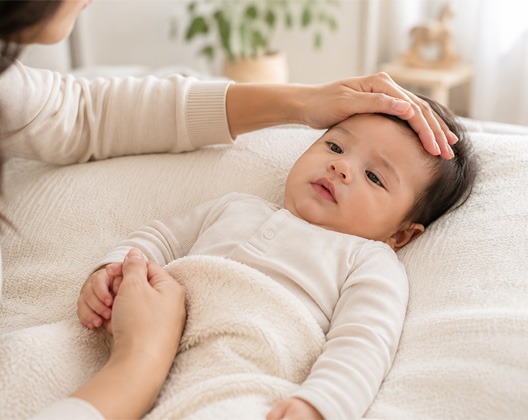
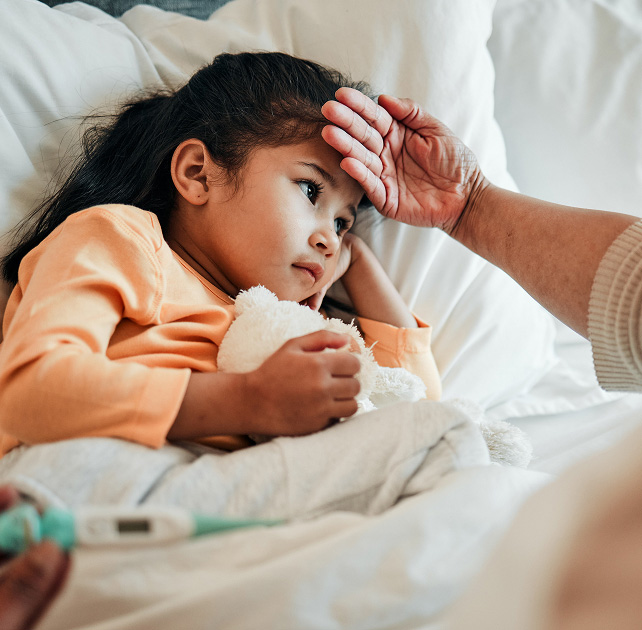
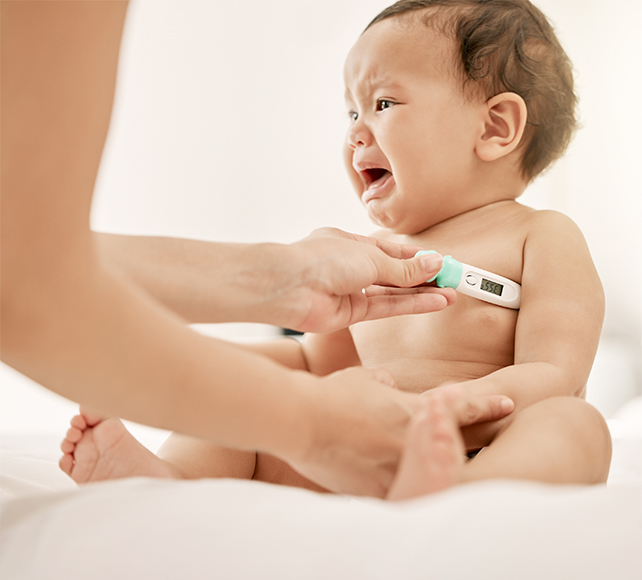
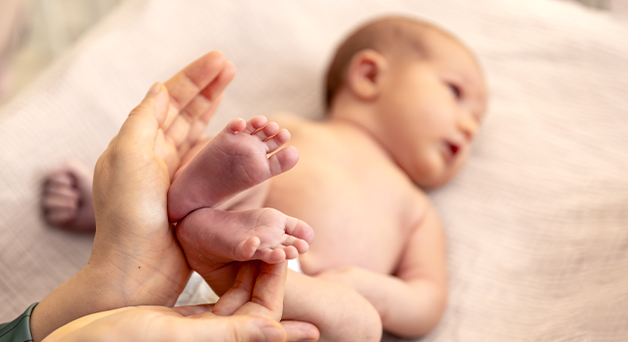
When your infant has a fever, the most important thing to ask yourself is “How sick is the baby?” If she will play, smile, and drink well, most likely she is not seriously ill. Sometimes the height of fever alone makes the baby fussy and listless.
Fever is a remarkably useful signal that alerts us to something amiss in the body, drawing our attention to the illness causing the fever. The degree of fever, however, does not always indicate the seriousness of the illness. Some children respond to a slight illness with considerable temperature elevation. On the other hand, certain dangerous illnesses, such as appendicitis, are often accompanied by very little fever. Therefore, while the presence of a high fever is a cause for concern, it is rarely a cause for alarm.
Should fever be treated?
Not always. Fever is one of the members of the body’s defense team. It helps the physician follow the course of an illness to see if the infection is under control. Fever should ONLY be treated if it is causing undue discomfort to the child and preventing him from resting.
Will fever cause convulsion or brain damage?
Fever does not cause brain damage. While it is true that certain children are susceptible to convulsions with fever, the convulsions usually appear suddenly in these susceptible children. Febrile convulsions (or seizures) usually occur at the beginning of an illness, often before the parents realize that the child is sick. In a child known to be subject to these episodes, proper advice for future illnesses will be given.
TAKING YOUR BABY’S TEMPERATURE:
If you suspect your baby is running a fever, first take an axillary temperature.If you suspect your baby is running a fever, first take an axillary temperature.
Axillary Temperature:
Place bulb of thermometer firmly in baby’s armpit.
Hold the arm gently but firmly for 3 minutes or until the digital thermometer beeps.
Remove and read the thermometer.
If your baby has an elevated temperature (above 99.4 axillary) call your doctor.
Rectal temperature: (Take only if your doctor recommends)
Lubricate bulb of thermometer with Vaseline.
Insert thermometer into your baby’s rectum 1/2 inch.
Hold thermometer in place for 3 minutes or until the digital thermometer beeps.
Remove and read the thermometer.
Call physician for temperature at or below 97.6 or at or above 100.4.
CALL YOUR PEDIATRICIAN IF YOUR BABY:
Has a rectal temperature of 100.4 F or higher.
Refuses feedings or vomits repeatedly.
Cries excessively without obvious cause.
Is listless or lethargic.
Has frequent FLUID bowel movements (with mucous, blood, or foul odor). Loose, non-formed stools are normal.
Has any unusual rash.
Has swelling or bleeding at the circumcision site, or the plastibell does not fall off by the 8th day.
Has any drainage or odor from the umbilical cord area.
Has yellow skin or whites of eyes seem yellow (jaundice).
Rubs his/her ears and cries as if in pain. Has a productive cough.
Has any breathing difficulties such as: irregular breathing pattern, a change in color, i.e. seems bluish.
ITEMS TO BE KEPT ON HAND:
Infant’s or Children’s Tylenol (Acetaminophen). NEVER GIVE TYLENOL TO AN INFANT UNDER THE AGE OF 2 MONTHS UNLESS RECOMMENDED BY YOUR DOCTOR!
Rubber or plastic bulb ear syringe (for nasal suction).
Protective diaper cream, ointment, or corn starch.
Phone Numbers: Pharmacy, Poison Control, Nearest Emergency Fire Rescue, Pediatrician.
Other Fever Questions:
Will penicillin or any other antibiotics control fever?
Remember, fever is a symptom and not a disease . Therefore, fever is not cured by a shot or antibiotic unless it is caused by a treatable bacterial infection such as a strep throat, ear infection, or pneumonia. Most fevers are caused by viral infections, which are neither cured nor helped by antibiotics. Repeated unnecessary antibiotics may make your child resistant to the drug, thereby depriving him of its use when he may need it in the future.
Does teething cause fever?
Although teething is a source of irritability, it is not a cause of significant fever. It may cause a slight elevation of body temperature, but this usually is less than 100F.
The following are simple, but effective methods of controlling the irritability, discomfort, and fretfulness usually associated with fever:
If your child has a rectal temperature equal to or greater than 100.4, and is less than 12 weeks old, please call our office immediately.
Encourage plenty of fluids to prevent dehydration.
Dress your child lightly and do not cover him with blankets or quilts. This only holds the fever in, insulates, and makes him hotter.
Do not use alcohol rubs or ice water enemas for fever.
FEVER IS NOT A CAUSE FOR PANIC! THE BEST THERAPY FOR THE HOT CHILD IS A COOL MOTHER
Understanding the meaning of fever and practicing the few principles presented in this discussion will enable you to better care for this common symptom. However, your physician must be consulted so that the cause of the fever is determined and proper therapy initiated.
Cookie Consent
This website uses cookies.
We use cookies to analyze website traffic and optimize your website experience. By accepting our use of cookies, your data will be aggregated with all other user data.
Cookie Preferences
Manage your cookie preferences below:
Essential cookies enable basic functions and are necessary for the proper function of the website.
Name
Description
Duration
Cookie Preferences
This cookie is used to store the user's cookie consent preferences.
30 days
You can find more information in our Cookies policy and .